
In the hands of New Orleans producer Brian J, musical traditions don’t just meet—they metabolize. Gitkin’s latest instrumental “The One” creates neural pathways between Sudanese synthesizers and Mississippi hill country blues, finding unexpected symmetries in their circular structures.
The track opens with Tuareg-inspired guitar patterns that seem to map invisible trade routes across the Sahara. But just as these desert lines establish themselves, a Moroder-esque bassline emerges like neon reflecting off wet pavement, creating an improbable dialogue between continent and club.
Brian J’s production doesn’t treat these elements as exotic seasonings but as load-bearing structures. The “big distorted riffs” that could have come from Tony Iommi’s playbook don’t announce themselves as references but integrate naturally into the song’s evolving architecture. Each element earns its place through function rather than flavor.
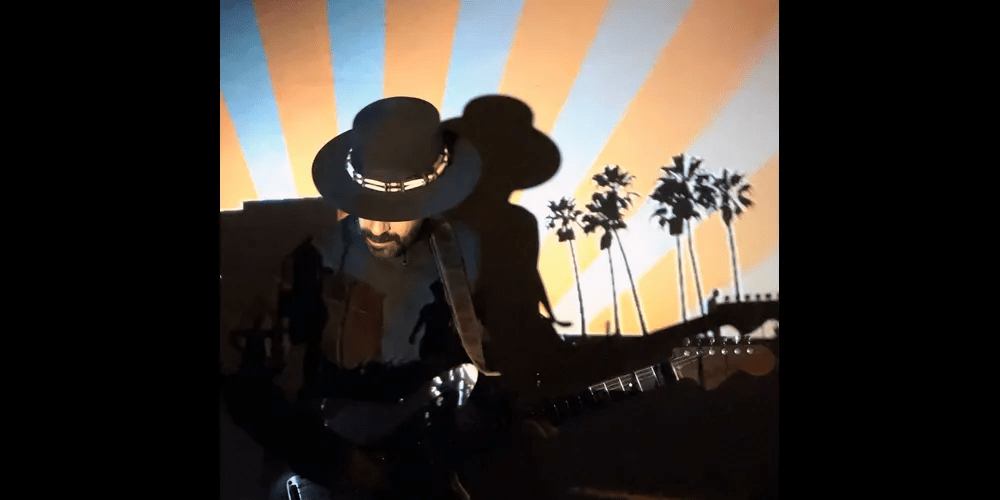
What’s remarkable is how the track maintains forward momentum while simultaneously spinning in place. The arpeggiating bassline provides constant motion while the hill country blues elements add circular persistence, creating a sense of movement that somehow feels both linear and orbital.
The early 2000s Williamsburg drum patterns act less like timekeepers and more like cultural translators, finding common ground between Sudanese syncopation and Brooklyn’s particular strain of studied abandon. It’s a rhythm that remembers both its ancestral and recent histories.
Brian J’s one-man-band approach serves this material perfectly. Rather than trying to coordinate multiple musicians’ interpretations of these diverse traditions, he’s able to wire them directly into each other, creating new neural pathways between seemingly disconnected nodes of musical evolution.
As the track progresses, these elements stop feeling like individual ingredients and start functioning as a newly evolved organism. The hill country blues groove that emerges doesn’t feel like a destination but a revelation—as if this was always hiding in the DNA of each component, waiting to be expressed.
Working without vocals, Gitkin lets these conversations happen in pure sound. There’s no need for linguistic translation when the dialogue happens at the level of rhythm and texture. The result feels less like fusion and more like friction—the heat generated when different musical traditions rub against each other at high speeds.
This preview of Gitkin’s upcoming Wonderwheel Recordings release suggests an artist who understands that true cultural exchange isn’t about sampling or borrowing but about finding the places where separate traditions reveal their shared foundations. “The One” creates its own context, its own geography, its own laws of musical physics.
 B-Side Guys
Leave a Reply