
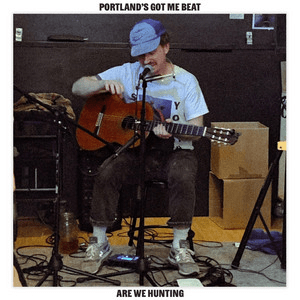
In the grand tradition of place-as-antagonist songwriting, Are We Hunting’s “Portland’s Got Me Beat” delivers a bleary-eyed portrait of urban displacement that pulls no punches. This Northern California export crafts a slowcore confessional that transforms Portland’s Alberta Street into a rain-soaked theatre of personal crisis.
The track’s genius lies in its geographical precision – counting out exactly 962 miles from LA, watching rain pepper the pavement of Alberta Street, all while the narrator spirals through the dark hours between midnight and dawn. Each detail lands with the weight of lived experience, building a world that feels as claustrophobic as it does specific.
Raw honesty pervades the lyrics, which read like dispatches from a lost weekend turned lost season. “The cocaine here is methamphetamine,” comes the menacing whisper, a line that crystallizes the song’s central theme of expectations violently colliding with reality. The narrator’s California origins become both identity and burden, marking them as perpetual outsider in a landscape of “Douglas firs and maple leaves.”
Musically, the track employs slowcore’s signature restraint to devastating effect. The deliberate pace mirrors the grinding slowness of sleepless nights, while subtle shifts in dynamics reflect the narrator’s deteriorating mental state. When the chorus hits – “Get me on that train and let me drink away my shame” – it feels less like a hook and more like a prayer.
Perhaps most striking is the song’s unflinching examination of failed coping mechanisms. “I thought that’s how it works oh my mistake it makes it worse” captures the bitter wisdom of learned lessons, delivered without an ounce of self-pity. The admission serves as the track’s emotional fulcrum, transforming what could have been mere self-destruction into something approaching self-awareness.
The Portland depicted here isn’t the quirky utopia of popular imagination, but rather a Gothic Northwest fever dream populated by “white girls with tattoos of their favorite trees.” It’s a detail that in lesser hands might play as satire, but here serves as another piece of evidence in the song’s case against forced adaptation to unwanted circumstances.
Time itself becomes fluid, marked only by incremental counting: “1,2,3 in the morning” becomes “3,4,5 in the morning,” suggesting a night that refuses to end. The effect is claustrophobic, trapping the listener in the narrator’s endless dark night of the soul.
This is the rare song about hitting bottom that never tries to soften its landing. When the narrator declares “My whole life is done,” it’s not melodrama but acceptance. The fact that they’re still standing – still singing this “sad song” – becomes its own kind of victory, albeit a pyrrhic one.
“Portland’s Got Me Beat” ultimately succeeds as both character study and cautionary tale, proving that sometimes the most universal stories are the most unflinchingly specific. In documenting one person’s surrender to circumstance, Are We Hunting has created something paradoxically triumphant.
 B-Side Guys
Leave a Reply