
Between high school assignments and college applications, something extraordinary has taken root in a Long Beach home studio. Josefine Neumann’s seventh album “Like Ivy, We Will Grow” emerges as a testament to artistic independence and teenage tenacity, proving that age is merely a number when it comes to musical maturity.
The 15-track collection opens with “Good Night,” immediately establishing Neumann’s evolution from her acoustic-guitar-centered beginnings. Her self-taught instrumental prowess shines as she weaves together intricate harmonies and fingerpicking patterns, creating a textural richness that belies her years.
“Ivy,” the album’s namesake, demonstrates Neumann’s growing confidence with multi-instrumental arrangements. Here, her Scotch-Irish and Texan roots intertwine like the climbing plant itself, creating something both grounded and reaching skyward.
“Nothing” marks one of the album’s standout moments, showcasing Neumann’s ability to craft complex emotional landscapes. Her use of mandolin and percussion adds depth to the arrangement while maintaining the intimate feel that has become her trademark.
“The Saddest Man on Earth” emerges as a particularly compelling track, its rollicking rhythm contradicting its melancholic title. This marriage of Celtic and Americana influences results in a toe-tapping ballad that showcases Neumann’s gift for storytelling through melody.
The album’s production, handled entirely by Neumann in her home studio, deserves special mention. “Petrichor” – already garnering attention with over 23,000 Spotify streams – demonstrates her growing mastery of the recording process. The song’s eerie atmosphere, enhanced by innovative use of a guitar bow, creates a sonic representation of its title’s meaning: the pleasant smell following rain.
What sets “Like Ivy, We Will Grow” apart from Neumann’s previous work is its fearless exploration of new sonic territories. While maintaining her folk roots, she ventures into more textured and complex multi-instrumental compositions. The addition of mandolin, percussion, and experimental techniques like the guitar bow creates a rich tapestry of sound that rewards repeated listens.
The album’s middle section, including tracks like “Chlorine” and “Just to Spite You,” shows Neumann’s willingness to push beyond her comfort zone. These songs maintain her signature intricate harmonies while incorporating new elements that expand her musical vocabulary.
“Victory” stands as another highlight, its triumphant melody carrying lyrics that feel both personal and universal. The production here is particularly noteworthy, with each instrumental layer carefully placed to support rather than overwhelm Neumann’s distinctive vocals.
Throughout the album, Neumann’s growth as a songwriter is evident. Her lyrics demonstrate a maturity that transcends her seventeen years, while her melodies retain the fresh perspective of youth. This combination creates something rare in contemporary folk music – wisdom without world-weariness.
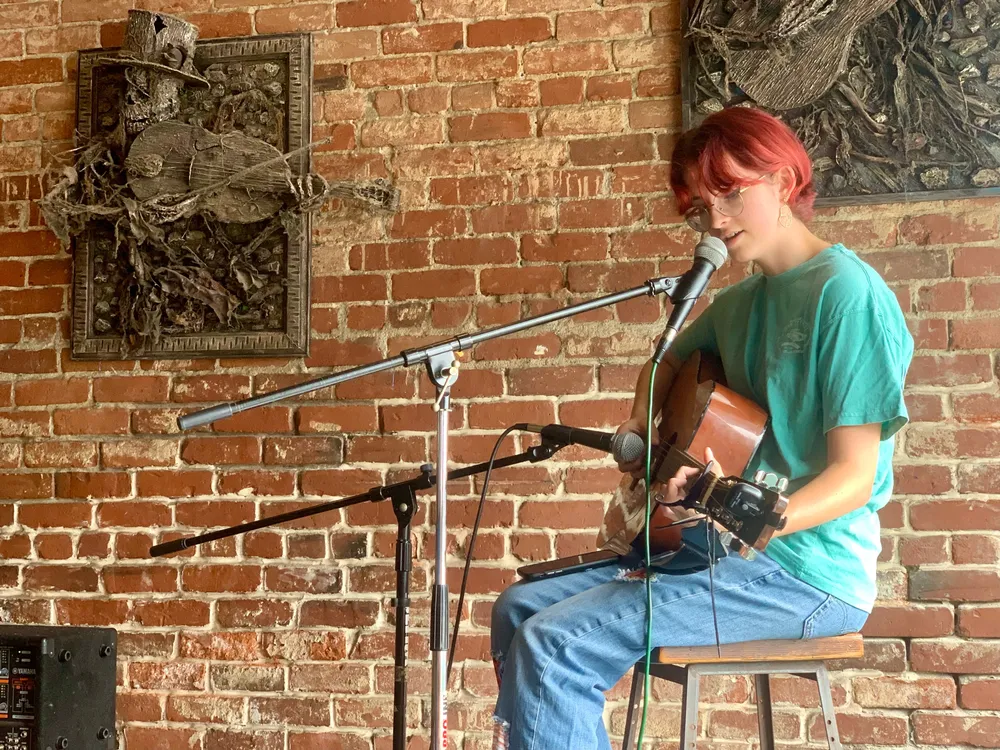
The decision to record, edit, and produce the entire album herself – while juggling her senior year of high school – speaks to Neumann’s dedication to her craft. Rather than settling for the safety of her acoustic guitar, she challenges herself with new instruments and techniques, creating a sound that’s both familiar and forward-looking.
As the album closes with “Chance,” listeners are left with a sense of having witnessed an artist in full bloom. Like its namesake plant, this collection grows in unexpected directions while maintaining strong roots in folk tradition.
What makes “Like Ivy, We Will Grow” particularly impressive is not just Neumann’s youth, but her complete artistic autonomy. In an era where production often involves multiple collaborators and AI assistance, she has created something entirely her own, from initial composition to final mix.
For long-time followers of Neumann’s work, this seventh album represents significant growth while maintaining the authenticity that drew them in initially. For newcomers, it serves as an impressive introduction to a young artist who refuses to be limited by convention or expectation.
At a time when many artists her age are still finding their voice, Josefine Neumann has not only found hers but is actively expanding its range. “Like Ivy, We Will Grow” stands as proof that true artistic vision knows no age limit, and that sometimes the most impressive growth happens in the quiet spaces between bedroom walls and homework assignments.
 B-Side Guys
Leave a Reply