
Icarus Phoenix’s fourth studio album, “I Should Have Known the Things You Never Said,” arrives like a dust-covered postcard from the heartland of American disillusionment. Set for release on August 15, 2024, this 40-minute opus serves as both a personal exorcism and a broader commentary on the fractured state of the American dream.
Recorded in a whirlwind three-day session at June Audio in Provo, Utah, the album carries the raw energy of a band racing against time and their own demons. Producer Jed Jones, known for his work with Post Malone and The Killers, brings a polished sheen to the proceedings without sacrificing the gritty authenticity at the core of Icarus Phoenix’s sound.
The album opens with “The Things You Never Told Me,” a track that sets the tone for what’s to come. Drew Danburry’s vocals, weathered and world-weary, float atop a bed of shimmering guitars courtesy of Jake Bellows (of Neva Dinova fame). It’s a sonic representation of the moment you realize your life has irrevocably changed, and you’re not sure whether to mourn or celebrate.
“Live. Give. Lose. Grow.” follows, its uptempo rhythm belying the heavy subject matter. Justin Pacheco’s bass lines and Andrew Young’s drumming provide a solid foundation, allowing Danburry’s lyrics to dance between self-reflection and sardonic observation. It’s the musical equivalent of laughing to keep from crying.
The album hits its stride with “High Tide,” a standout track that showcases the band’s ability to blend introspective folk with more expansive soundscapes.
A cover of Mother Lights’ “In the Blood” serves as a palate cleanser midway through the album. It’s a bold choice that pays off, offering a moment of respite while reinforcing the themes of heredity and inescapable fate that run through the record.
“Doctor! Doctor!” injects a dose of gallows humor into the proceedings. It’s a track that demands multiple listens, revealing new layers with each spin.
The back half of the album maintains the momentum with “Hatillo 2” and “Painting,” the latter featuring Rocky Cordray’s contributions from Teleprom add an edge of experimental noise, creating a sonic backdrop that feels like a fever dream in a roadside motel . These tracks showcase Icarus Phoenix’s range, moving from intimate acoustic moments to more expansive, almost cinematic arrangements.
“When it’s time to go (I don’t know if it is)” serves as the emotional core of the album. Danburry’s lyrics grapple with the aftermath of his divorce and the difficult decision to move across the country, away from his young son. It’s a brutally honest exploration of parental guilt and the search for self-fulfillment that avoids easy answers or maudlin sentimentality.
The album closes with a one-two punch of collaborative efforts. “The Sword and Harp,” featuring Neva Dinova, is a slow-burning epic that builds to a cathartic crescendo. The final track, “Kanashimi (哀しみ),” with Lake Mary, serves as a haunting coda. Its Japanese title, meaning “sorrow,” encapsulates the bittersweet journey of the album. Chaz Prymek’s ambient textures weave in and out of the mix, creating a sense of unease that mirrors the song’s exploration of emotional turbulence.
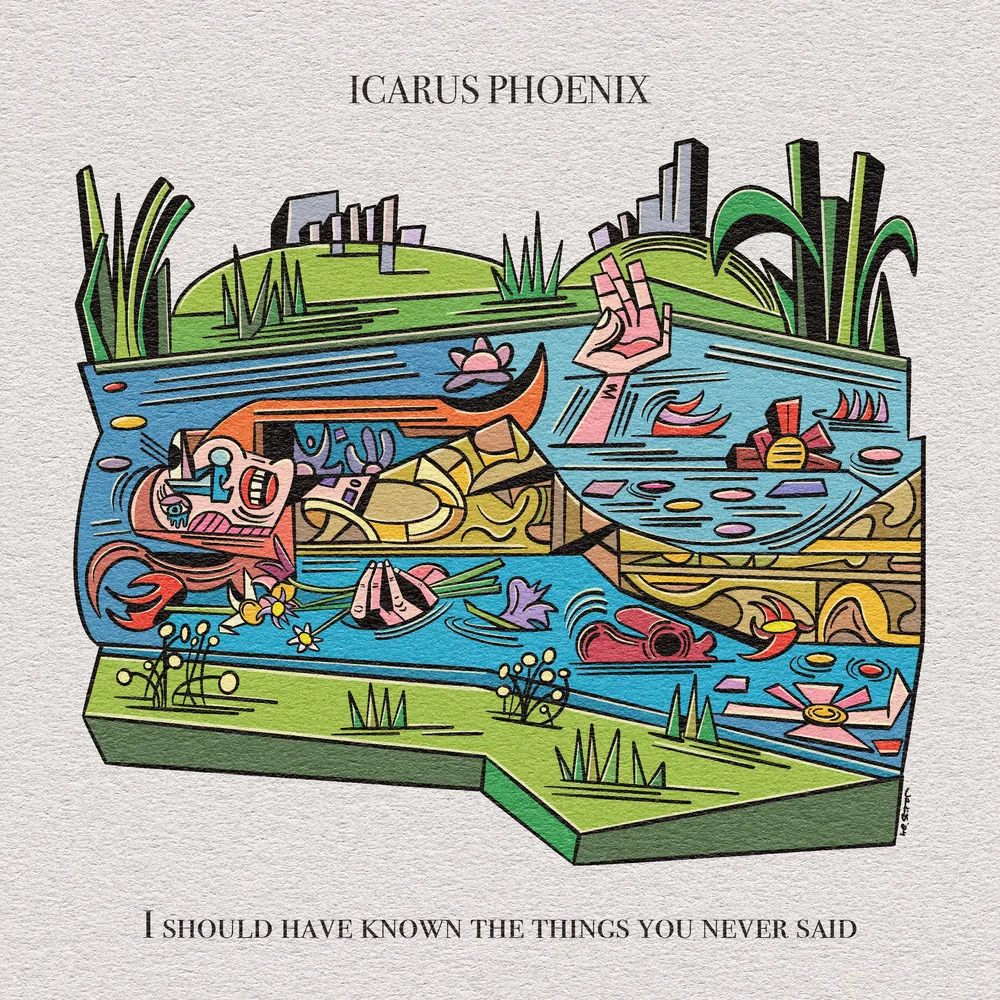
Throughout “I Should Have Known the Things You Never Said,” Icarus Phoenix manages to turn personal tragedy into universal truth. The band’s decision to record 40 songs in three days and distill them down to these ten tracks results in an album that feels both urgent and carefully crafted.
Danburry’s songwriting shines throughout, avoiding the pitfalls of navel-gazing that often plague albums born from personal upheaval. Instead, he uses his experiences as a lens through which to examine broader themes of displacement, alienation, and the search for meaning in a world that often seems devoid of it.
The production strikes a delicate balance between lo-fi intimacy and more polished arrangements. Jones’ touch is evident in the way each instrument occupies its own space in the mix, but there’s an organic quality to the recordings that keeps things from feeling too sanitized.
“I Should Have Known the Things You Never Said” is not an easy listen, nor is it meant to be. It’s an album that demands engagement, rewarding those willing to sit with its complexities and contradictions. In a musical landscape often dominated by algorithmic playlists and disposable pop, Icarus Phoenix offers something altogether more substantial.
As the final notes fade, listeners are left with the sense of having traveled across America’s emotional hinterlands, guided by a band unafraid to confront the messiness of the human experience. “I Should Have Known the Things You Never Said” stands as a testament to the power of music to transform pain into art, and confusion into clarity. It’s a record that feels both deeply personal and universally relatable, a snapshot of a moment in time that speaks to eternal truths.
In the end, Icarus Phoenix has crafted an album that lives up to its mythological namesake. Like Icarus, they’ve dared to fly close to the sun of raw emotion and painful truths. Unlike him, they’ve emerged not with melted wings, but with a work of art that soars on the thermals of human experience. “I Should Have Known the Things You Never Said” is not just an album; it’s a journey, an exorcism, and ultimately, a triumph.
 B-Side Guys
Leave a Reply