
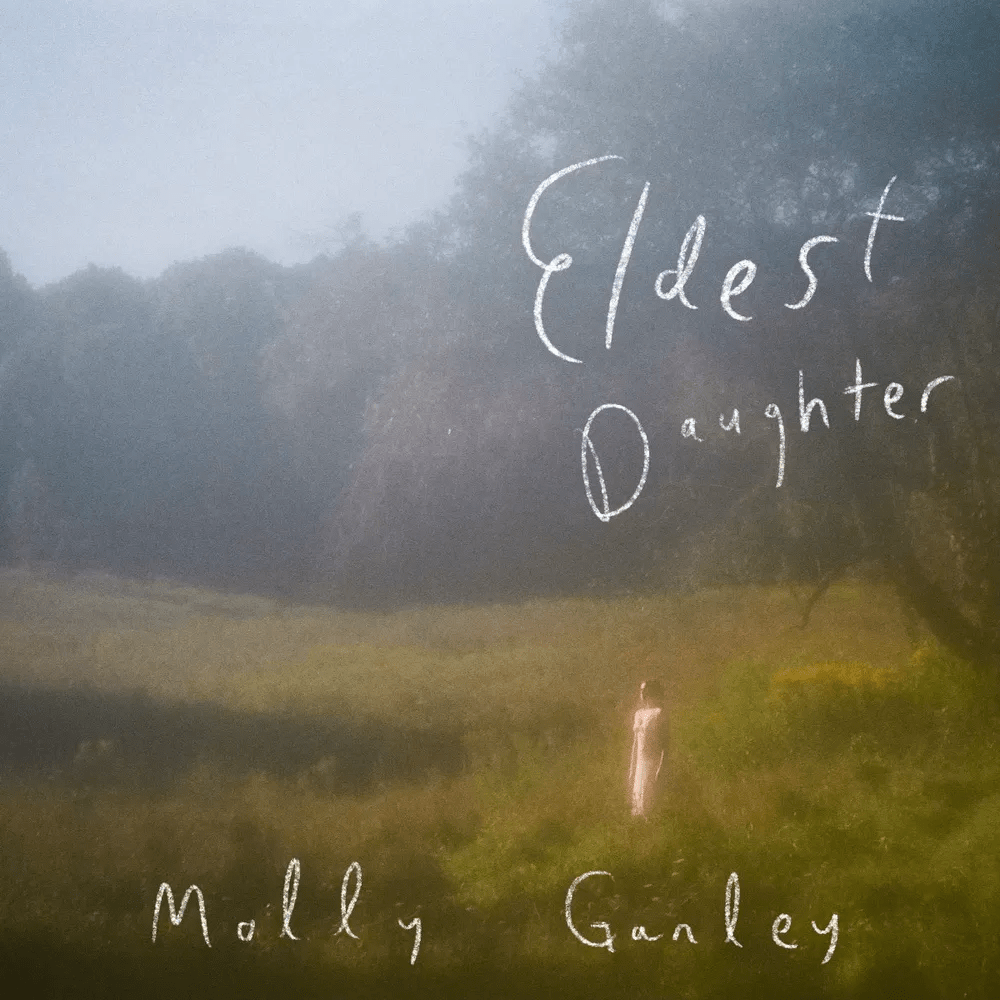
In the opening moments of her debut album, Molly Ganley makes a declaration that reverberates through all eight tracks: “I am not your hero… I am only everything that I’ve ever known.” This statement of boundaries and self-definition serves as both introduction and thesis for Eldest Daughter, a folk collection that chronicles the messy, often beautiful process of shedding expectations and embracing uncertainty.
Recorded in Brooklyn with producer Quinn Devlin, Ganley’s 39-minute debut creates an intimate space where perfectionism unravels into acceptance. What makes this collection particularly affecting is how Ganley transforms personal revelation into universal connection. The album speaks directly to anyone who’s ever questioned their path or purpose—which is to say, nearly everyone.
The title track establishes the album’s emotional landscape with gentle determination. Ganley’s voice—clear, unaffected, and remarkably expressive—delivers its message of self-reclamation without melodrama. Her rejection of prescribed roles (savior, soldier, hero) feels less like rebellion and more like necessary evolution. When she sings about moving on, the emphasis falls on forward motion rather than escape, suggesting growth instead of abandonment.
“Meet Me Where I’m At” shifts perspective toward present-moment awareness, creating one of the album’s most relatable moments. Ganley captures the peculiar isolation of modern existence—answering email surveys with unearned certainty while privately drowning in doubt, singing to houseplants sixteen stories above street level, waiting for takeout while contemplating existential questions. The repeated request to “meet me where I’m at” isn’t demanding but invitational, acknowledging the different paths we all travel while seeking connection across the distance.
The instrumentation throughout the album deserves special mention. The supporting musicians—James Wyatt Woodall, Jack Aylor, Jordan Wolff, Will Marshall, Kate Goddard, and Rachel Lanskey—provide arrangements that enhance without overwhelming Ganley’s intimate narratives. Their contributions feel conversational rather than performative, creating sonic environments that mirror the emotional tenor of each song.
On “Comparisons,” perhaps the album’s most immediately relatable track, Ganley explores how external metrics poison internal peace. The arrangement builds gradually, mirroring the mounting anxiety described in lyrics about sleepless nights and urban discomfort. What prevents the song from collapsing under its heavy theme is Ganley’s vocal performance, which maintains vulnerability without surrendering to despair. The repeated refrain about being unable to “take the comparisons” strikes a nerve in our social media-saturated era, where everyone’s curated highlights become someone else’s benchmark for adequate living.
“Whatever Happened” and “Who Are You” form the album’s contemplative middle section, creating space to examine relationships that shape identity. “DNA” extends this examination across generational lines, considering how family patterns repeat and transform through time. These tracks benefit from sparser arrangements that foreground Ganley’s storytelling, allowing listeners to project their own experiences onto her carefully crafted observations.

The album builds toward emotional release with “Lose Control,” which paradoxically finds freedom within structure. Here, the full band creates the album’s most dynamic moments, suggesting that surrendering to uncertainty might be more exhilarating than terrifying.
Closing track “To the Mountains” offers a tender counterpoint to the album’s questioning nature. This love song moves beyond romantic cliché to explore how genuine connection can provide an anchor amid life’s uncertainties. The imagery of mountains and sunshine feels earned rather than trite, grounded in the specificity of lived experience. When Ganley sings about gathering sunshine for someone else, the sentiment resonates because it follows seven tracks of authentic self-examination.
What distinguishes Eldest Daughter from many contemporary folk debuts is its comfort with complexity. Ganley doesn’t offer easy answers or Instagram-ready wisdom. Instead, she creates space for contradictions: wanting independence while craving connection, seeking answers while suspecting they don’t exist, honoring the past while refusing to be defined by it.
Producer Quinn Devlin deserves credit for maintaining this delicate balance throughout the album. The production remains transparent, allowing Ganley’s voice and lyrics to occupy center stage while providing subtle sonic textures that enhance each emotional turn.
Eldest Daughter will likely find its deepest resonance with listeners navigating life’s transitional moments—whether entering adulthood, leaving relationships, changing careers, or simply questioning long-held assumptions. Ganley has created a companion for uncertain times, offering not a roadmap but something more valuable: the recognition that confusion and clarity often occupy the same space.
In a musical landscape often dominated by certainty—whether the bombastic confidence of pop or the studied authenticity of much contemporary folk—Ganley’s willingness to inhabit questions rather than answers feels genuinely refreshing. Eldest Daughter suggests that perhaps the most honest response to life’s complexities isn’t finding all the answers but learning to live gracefully with the questions.
 B-Side Guys
Leave a Reply