
History weighs differently depending on where you stand. In Eastern Germany, that weight manifests in abandoned buildings, depopulated towns, and memories that oscillate between nostalgia and trauma. Danish duo Linebug—transplanted to Zeitz in 2021—has spent the last few years gathering these weighted memories, transforming them into “Portraits of Invisible Places,” an ambitious audio-visual album that elevates forgotten narratives with remarkable sensitivity.
What distinguishes this project immediately is its refusal to traffic in simplistic East German stereotypes. Line Bøgh and Christian Gundtoft approach their adopted home with the perspective of respectful outsiders—close enough to capture authentic voices yet removed enough to see patterns that locals might take for granted. The result is a forty-minute journey through ten locations, each with stories that challenge the reductive “poor East Germans” narrative that has calcified in Western consciousness.
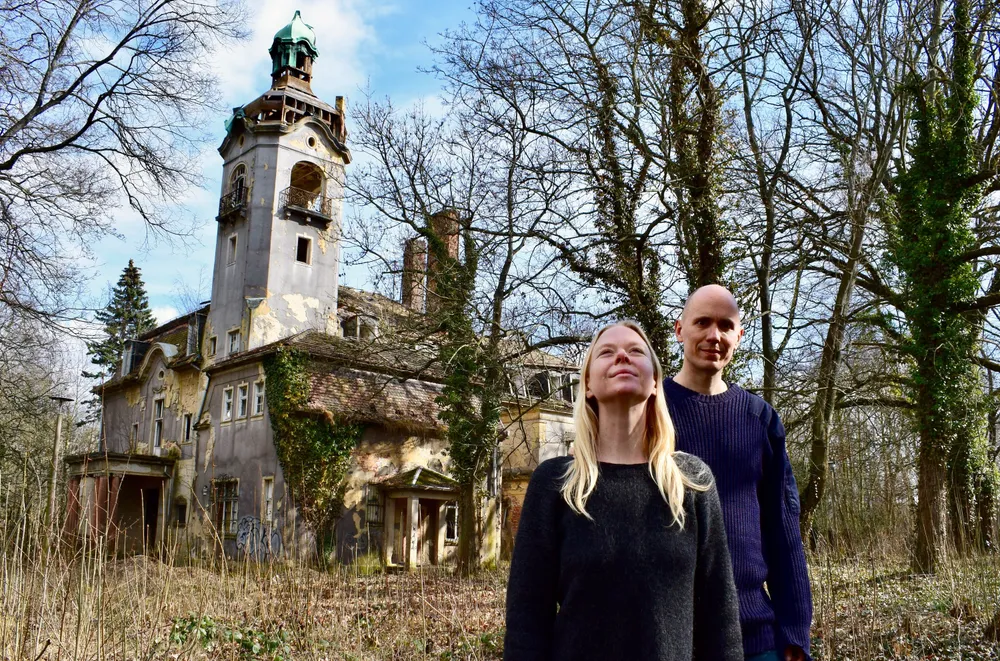
The album opens with “Temporary Home,” an ethereal meditation on Zeitz itself. Bøgh’s crystalline vocals float above delicate piano figures and subtle electronic textures, creating a sonic landscape that mirrors the town’s decayed elegance. The track establishes the album’s approach: never romanticizing decay, yet finding beauty in resilience. Gundtoft’s animations for this piece (available along with all the visual components at https://www.linebug.net/invisible-english) incorporate architectural elements from Zeitz, transforming crumbling facades into living entities with stories to tell.
“Rainbows in Hoywoy” addresses Hoyerswerda’s complex history with remarkable nuance. The town, infamous for racist riots in the 1990s, is portrayed neither as villain nor victim. Instead, Linebug creates space for contradictions—how places can simultaneously hold darkness and light. The percussive elements here suggest both conflict and potential, while field recordings from contemporary Hoyerswerda weave through the composition, anchoring abstract concepts in lived reality.
“The Last Hearts Made of Coal” stands as perhaps the album’s most affecting piece. Addressing former mining communities like Deuben struggling for post-industrial identity, Bøgh’s vocals achieve a rare emotional resonance without resorting to sentimentality. The production features subterranean rumbles and mechanical echoes that evoke both mining operations and the emotional undertow of communities in transition. Gundtoft’s animation for this track ingeniously transforms coal dust into beating hearts and back again, visualizing the metaphor with stunning economy.
The album’s middle section becomes increasingly atmospheric. “When We Find It” and “Bubble of Convenience” explore the psychological dimensions of living amid historical erasure. “Someone Else’s Tragedy” addresses Demmin’s devastating WWII mass suicide with appropriate gravity while avoiding exploitation. Here, Linebug demonstrates extraordinary sensitivity, using restrained instrumentation and space to convey the weight of events too profound for direct representation.
A significant tonal shift arrives with “10,000 Sunflower-faces in Bloom,” where brightness penetrates the album’s melancholy atmosphere. This piece celebrates the cultural richness that persists despite economic challenges, with choral elements suggesting community resilience. The corresponding animation depicts sunflowers emerging from abandoned industrial sites—heavy-handed symbolism in lesser hands, but here rendered with genuine artistic conviction.
“In Other People’s Eyes” examines how external perceptions shape identity, a particularly resonant theme for East Germans who have often been defined by Western narratives. The track incorporates fragments of media reports, creating tension between lived experience and mediated representation. This meta-awareness about storytelling itself adds conceptual depth to the project, acknowledging Linebug’s own role in shaping these narratives.
The album concludes with “The World is Getting Worse but Life is Getting Better,” a title that encapsulates the project’s nuanced perspective. Rather than offering easy resolution, the track embraces contradiction—how personal happiness can coexist with broader social decline, how hope persists in challenging circumstances. The arrangement here is the most expansive on the album, suggesting both uncertainty and possibility.
Throughout “Portraits of Invisible Places,” Linebug maintains remarkable cohesion without sacrificing variety. Bøgh’s vocals serve as the consistent thread, her ethereal delivery grounding even the most experimental passages in human emotion. The electronic elements never overwhelm the organic instrumentation, creating a soundscape that feels both contemporary and timeless—appropriate for an album exploring how past and present intertwine.
What elevates this project beyond merely accomplished musical craftsmanship is its documentary ambition. By incorporating authentic field recordings and visual documentation of these locations, Linebug transforms abstract historical concepts into sensory experiences. The animations don’t simply illustrate the music but engage in conversation with it, adding layers of meaning while respecting the viewer’s intelligence.
In documenting these “invisible places,” Linebug has created something rare—art that serves both aesthetic and social purposes without compromising either. The album functions simultaneously as engaging musical experience, historical document, and cultural intervention. For listeners who engage with both the audio and visual components, “Portraits of Invisible Places” offers something increasingly scarce in our fragmented media landscape: a contemplative space where complexity is neither simplified nor fetishized, but simply allowed to exist in all its contradictory fullness.
 B-Side Guys
Leave a Reply